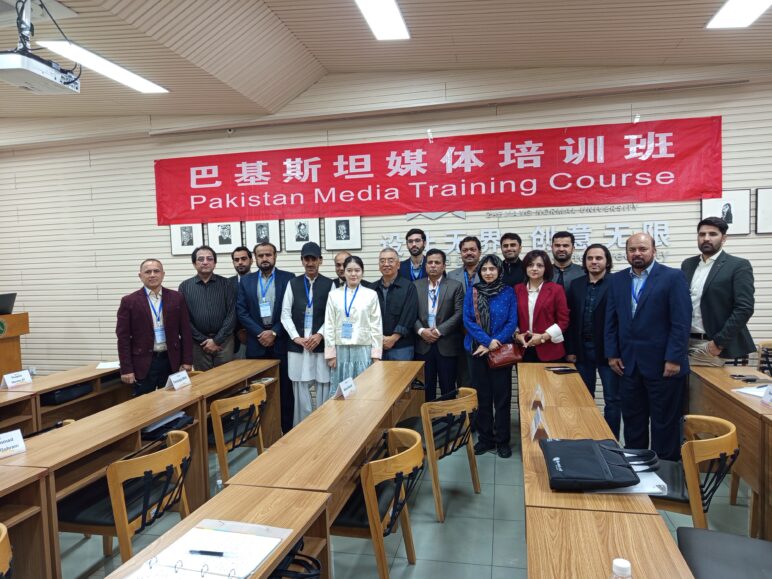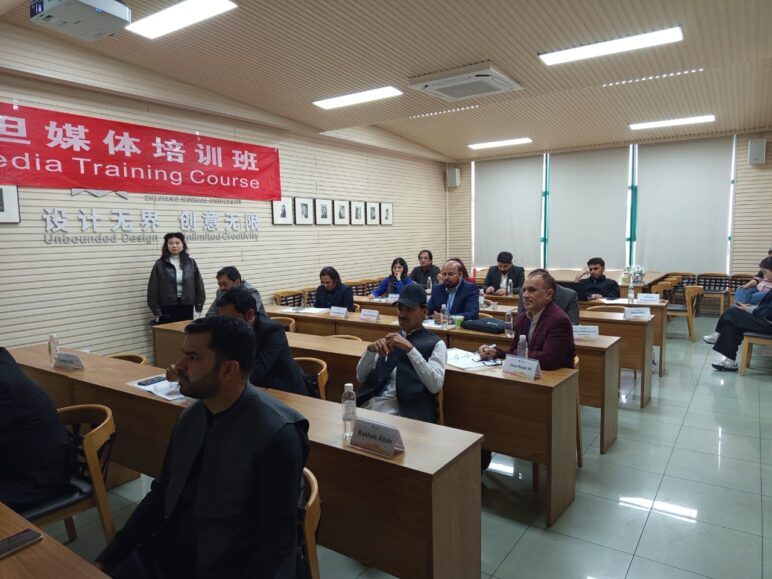
GILGIT: Pakistan’s Ambassador to China, Khalil Hashmi, visited Gilgit accompanied by a delegation of Chinese investors — including representatives of Iron Brothers International, the Chinese company contracted to develop the Rs27 billion Maqpon Das Special Economic Zone (SEZ) — in a visit widely seen as a significant step toward materialising one of Gilgit-Baltistan’s most consequential economic projects under the China-Pakistan Economic Corridor (CPEC).
The Site Visit
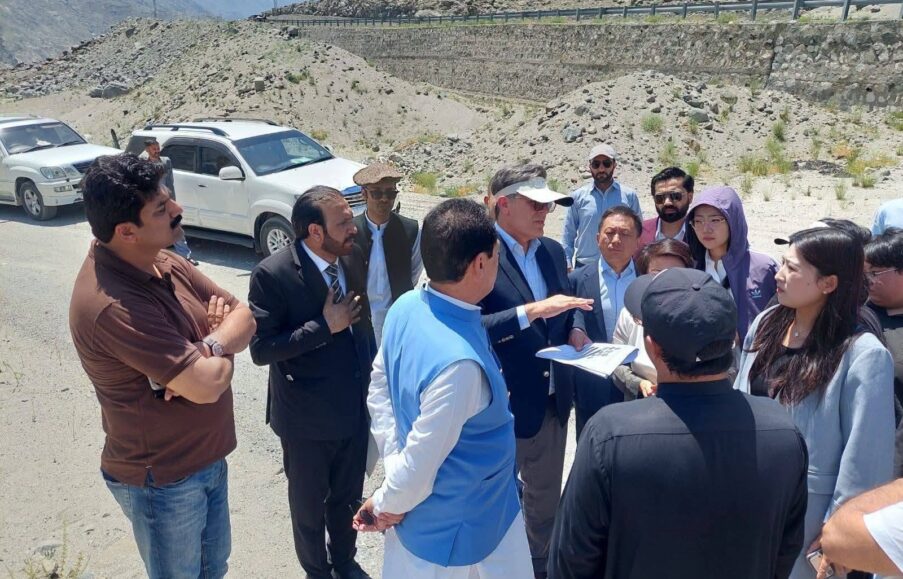
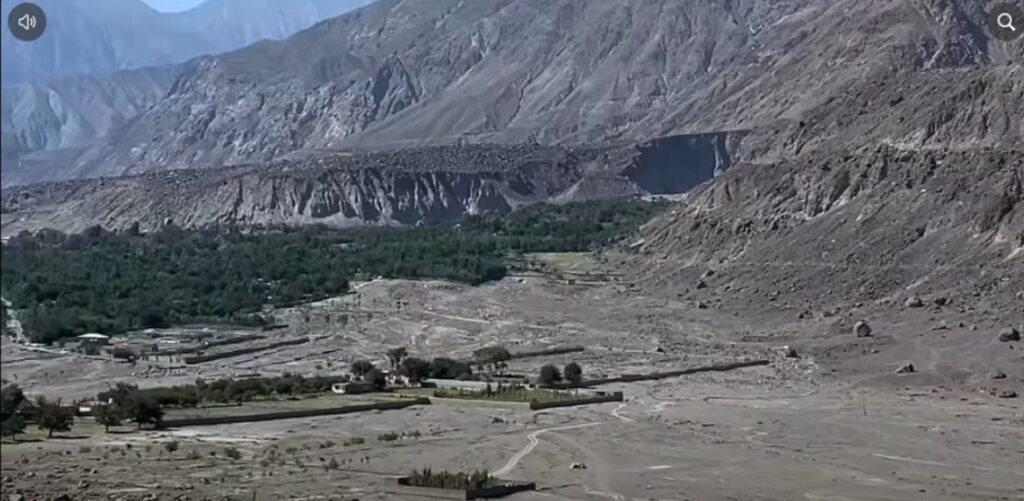
The delegation conducted a detailed on-site inspection of the proposed Maqpon Das SEZ located in the Chhumogarh area of Gilgit. The visit was accompanied by the Chief Secretary of Gilgit-Baltistan, all relevant departmental secretaries, and the Director General of the Board of Investment, allowing the Chinese investors and senior officials to assess ground realities and evaluate the site’s investment potential firsthand.
The Meeting
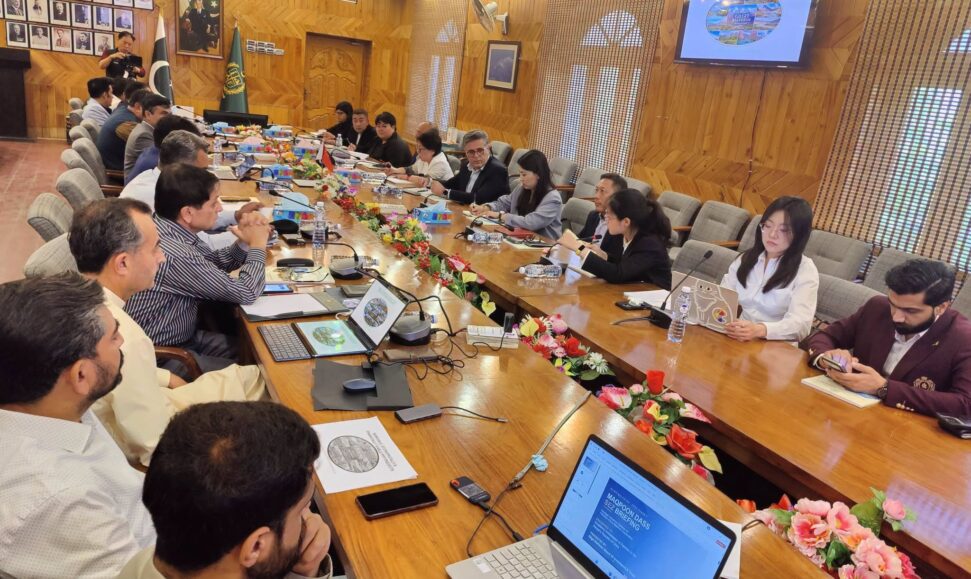
Following the site visit, a high-level meeting was convened in which Secretary of the Board of Investment, Shahzeb Sheikh, delivered a comprehensive briefing on the SEZ’s infrastructure, policy framework, and available investment opportunities.
Ambassador Hashmi expressed satisfaction with the project’s preparedness, describing it as a significant initiative for the region’s economic development. The Chinese investors expressed keen interest in Gilgit-Baltistan’s tourism, agriculture, and hydropower sectors. The Chief Secretary assured the delegation that the Gilgit-Baltistan government is fully committed to providing all necessary facilities and support to serious
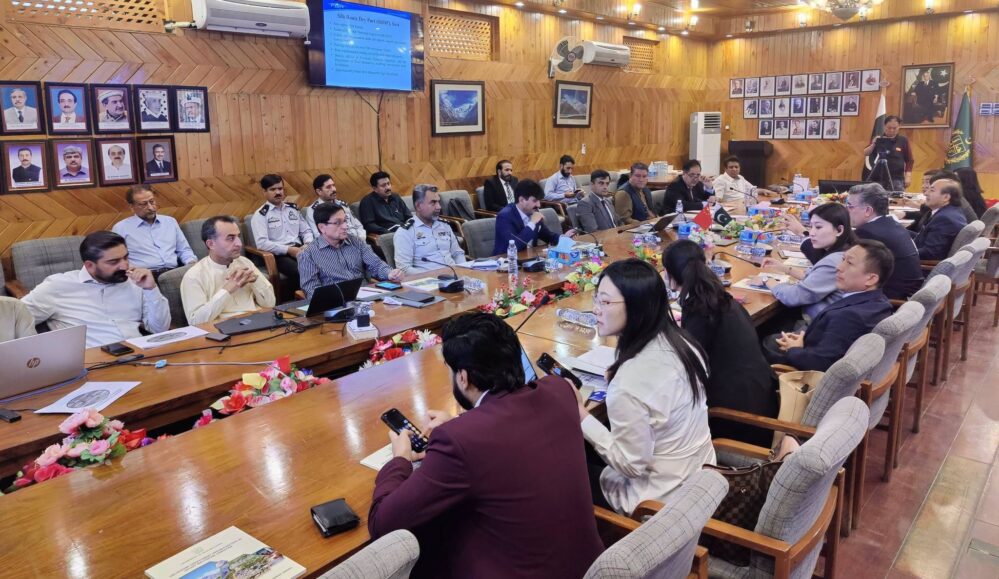
and genuine investors.
A key concern raised during the meeting was the difficulty of exporting Gilgit-Baltistan’s local products to China. The Secretary of Commerce specifically highlighted obstacles in accessing China’s Xinjiang province through the Khunjerab border crossing — a critical trade corridor for the region. Ambassador Hashmi committed to raising the matter with the Chinese government on a priority basis.
Project Background
The proposal to establish the Rs27 billion Maqpon Das SEZ has been under consideration since the early years of CPEC.
Special Economic Zones (SEZs) proposed and approved under the China-Pakistan Economic Corridor (CPEC) are considered vital for boosting industrial cooperation, enhancing trade, and building a stronger local economy across Pakistan.
Initially, 27 SEZs were proposed by the Ministry of Planning, Development and Reforms, distributed across provinces — eight in Khyber Pakhtunkhwa, seven each in Punjab and Baluchistan, three in Sindh, and one each in Gilgit-Baltistan and Islamabad.
In December 2016, during the 6th Joint Coordination Committee (JCC) meeting in Beijing — attended by all chief ministers of Pakistan — nine SEZs were formally approved covering all four provinces, Gilgit-Baltistan, Azad Jammu and Kashmir, and two at the federal level.
In Gilgit-Baltistan, one SEZ is planned across 250 acres at Maqpoon Das, with agro-based industries, minerals, livestock, handicrafts, and wood-related trades identified as potential sectors. The zone is designed to attract both local and foreign investors through a ten-year tax holiday, exemption from customs duties on capital goods imports, and other infrastructure guarantees from the federal government.
Significant Challenges
Nevertheless, the region continued to face significant challenges including a weak regulatory framework, poor governance, limited implementation capacity, and inadequate infrastructure. In this context, the establishment of a Board of Investment (BOI) branch in Gilgit-Baltistan was a notable development, given that the BOI serves as an active member of the CPEC working group on industrial parks and SEZs — making it essential for the Gilgit branch to take proactive measures in preparation for the zone’s development.
A breakthrough came in September 2025, when the Second Pakistan–China B2B Investment Conference was held in Beijing, attended by GB Board of Investment Chairman Fatahullah Khan and Director General Shahid Ali. On the sidelines of the conference, a historic MoU was signed — the first of its kind under CPEC — for the establishment of the Gilgit-Baltistan Special Economic Zone. Under the agreement, Iron Brothers International was designated as the developer of the SEZ. Upon completion, the project is expected to establish various industries and generate approximately 10,000 employment opportunities in the region.
Acquisition of Land
However, acquiring land for the project has remained a persistent challenge due to the Shamilat — the communal land ownership system — that continues to govern land rights in Gilgit-Baltistan.
In 2017, the Gilgit-Baltistan government formally initiated efforts to amend the existing legal framework to enable the transfer of uncultivated communal land to government ownership, a move that drew significant criticism from local communities and rights advocates.
Community Rights Cannot Be Overlooked
Maqpon Das is communal land belonging to the people of Chhumogarh, and serious concerns have been raised over the manner in which the government has pursued its acquisition.
Critics allege that authorities have attempted to take over the land without due compensation to the community, classifying it as state land on the basis of an archaic law dating back to the Dogra rulers — a colonial-era precedent widely considered unjust and inapplicable to modern land rights frameworks.
Former Inspector General of Police Afzal Ali Shigri has stated that recognising the Gilgit-Baltistan people’s rights to their land is essential for CPEC to succeed. Any further progress on the Economic Zone without taking the local community into full confidence would be deeply inappropriate. The people of Chhumogarh must be granted their constitutional, legal, and economic rights. Development can only be sustainable when the local population’s property rights, right to self-governance, and legitimate interests are fully respected — not sidelined in the name of progress.
Experts and community advocates stress that inclusive development, where local communities are partners rather than bystanders, is the only model that yields lasting results. The ambassador’s visit and Chinese investors’ interest may well open a new chapter for foreign direct investment in Gilgit-Baltistan — but for that promise to be fulfilled equitably, the government must ensure the people of Chhumogarh are at the table, not left behind.