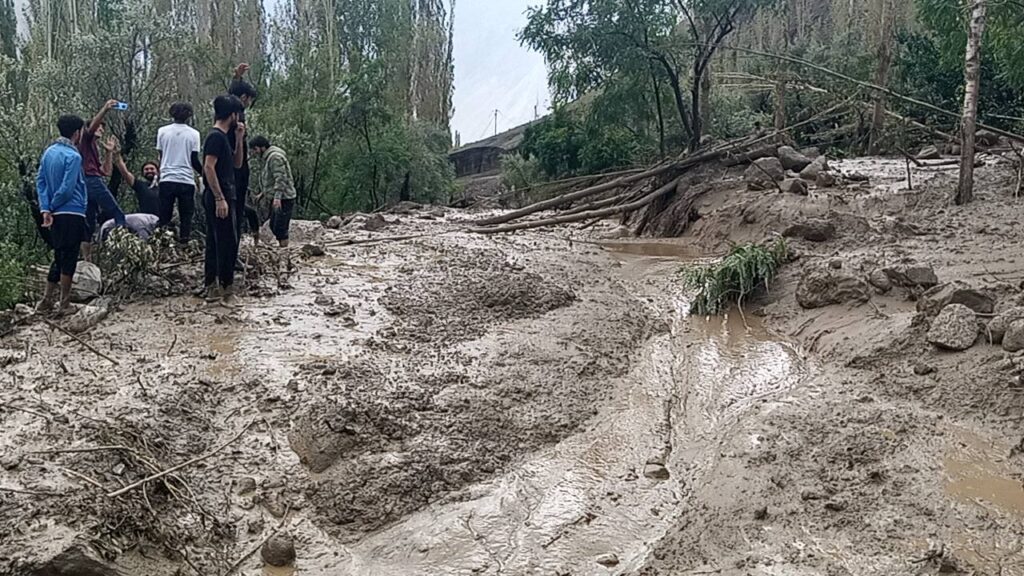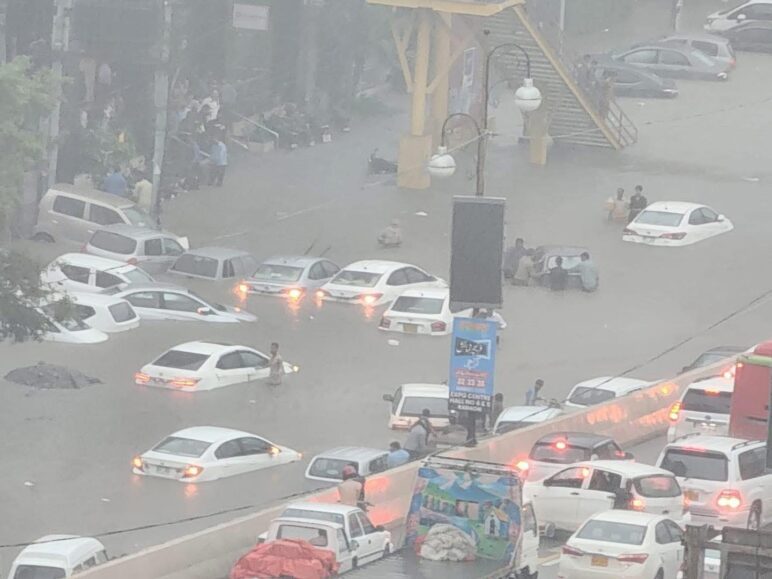
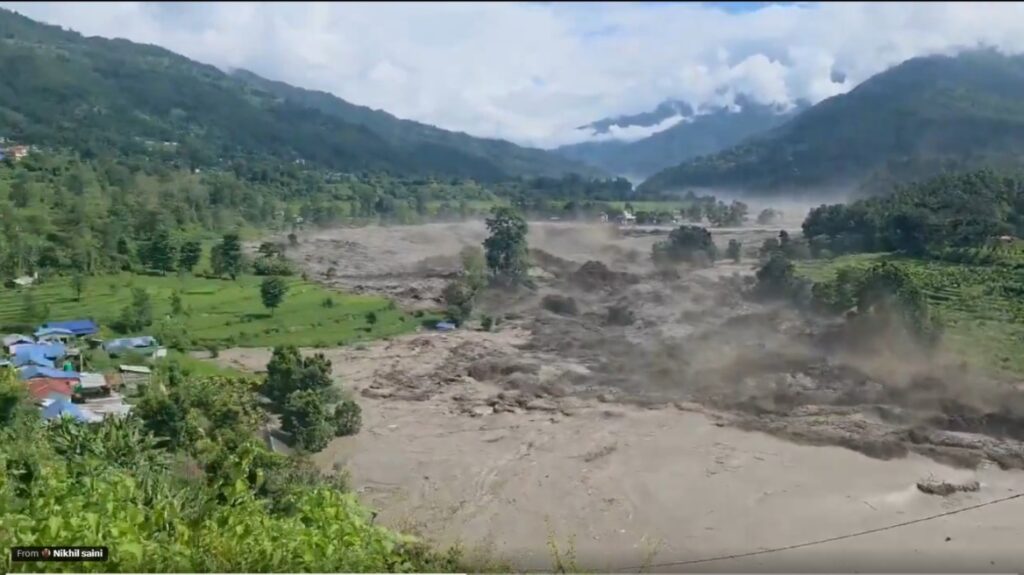
Kathmandu: Authorities in Nepal have confirmed the recovery of more than 300 bodies following the devastating floods that struck the country on Wednesday, while hundreds of foreign nationals remain missing.
According to Nepalese media reports, riverside settlements including Syaphrubesi, Betrawati and Trisuli have been completely wiped off the map, leaving thousands of people homeless.
The Nepalese government has declared an emergency in the affected areas. Rescue agencies and security forces are engaged in large-scale search-and-rescue and relief operations.
Several countries have offered assistance for the rescue efforts, but the Nepalese government has declined the offers for the time being.
Details of Missing Persons
The Nepal Tourism Board (NTB) has released a list of missing persons, according to which the number of missing nationals is as follows:
Nepal: 127
India: 178
United States: 65
Ukraine: 53
Malaysia: 51
Australia: 35
United Kingdom: 33
Canada: 25
Singapore: 9
Russia: 8
Germany: 8
Latvia: 6
South Africa: 6
According to Reuters, several people from China, South Africa, Portugal and the Netherlands are also missing. India’s Ministry of External Affairs said the missing Indian nationals include tourists and people working in the area. Around 200 Indian nationals are also reportedly stranded in Tibet.
According to South Korea’s Yonhap News Agency, eight South Korean nationals working on a hydropower project in Nepal are missing, while another 10 remain stranded in the area.
Nepal Flood Strikes During Peak Tourism and Pilgrimage Season
The devastating floods struck at a time when the trekking season had already begun in Nepal, while the full-moon festival was also getting underway in Tibet. During this season, mountaineers, trekkers, tourists and pilgrims from around the world travel to Nepal and Tibet.
August 28 is considered a sacred day for both Hindus and Buddhists, and thousands of pilgrims were travelling towards Gosaikunda Lake in Rasuwa.
In addition, Indian pilgrims travelling to Mount Kailash and Mansarovar in China were entering through the Rasuwa-Kerung checkpoint.
The Nepal Tourism Board said 644 tourists were present in the affected areas but could no longer be contacted. However, this does not necessarily mean that they were affected by the devastating floods. Their mobile phone connections may have been disrupted, or they may have already crossed into China before the disaster.
What Caused the Devastating Nepal Floods?
According to media reports, 5.2-magnitude earthquake tremors were initially reported in northeastern Nepal on Wednesday. Initial reports suggested that the earthquake had caused a dam on the Bhote Koshi River to collapse, triggering a massive flood that devastated Rasuwa district.
However, subsequent reports have pointed to a significantly different scenario.
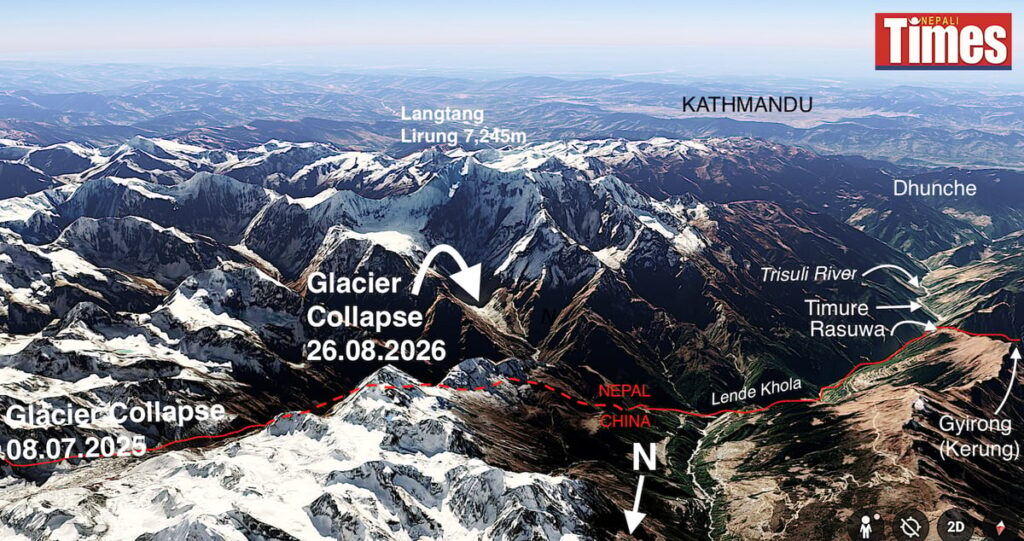
According to follow-up reports, a 4.4-magnitude earthquake occurred at 8:37 a.m. Nepal time on Wednesday near the Chinese border. At almost the same time, a massive avalanche occurred on the northern face of Mount Langtang. The debris completely blocked the Lhende Khola, a river near the Chinese border.
The blockage created a temporary lake, which soon burst. A wall of mud and rocks then surged downstream through the Trisuli River corridor towards Nepal, triggering the devastating flooding.
Experts reached these conclusions after examining satellite imagery from Planet Labs. The images indicated that the glacier collapse occurred on the northern face of Mount Langtang in Nepal.
Scientists remain divided over whether the avalanche on Mount Langtang’s northern face was triggered by the earthquake or whether the avalanche itself was so massive that its impact generated the tremors detected in the area.
Standing at 7,245 metres, Mount Langtang is located around 45 kilometres north of Kathmandu and has a tragic history.
During the 7.8-magnitude earthquake that struck central Nepal in April 2015, a massive avalanche descended from Mount Langtang and buried Langtang village. More than 300 people were killed in the disaster.
Experts have further examined Planet Labs satellite imagery to assess the sequence of events.
Climate Change Factor in Nepal Floods
If the earthquake was the trigger, it would suggest that the tremors destabilised a mountain landscape where snow and glaciers had already become increasingly unstable because of global warming.
The disaster occurred during the final days of the monsoon season, when slopes were heavily laden with snow and debris left behind by retreating glaciers had already become saturated with water. During colder periods, such debris can remain firmly bound together by permafrost.
Even without an earthquake acting as a trigger, the Himalayan region has witnessed several similar disasters in recent years resulting from a combination of these factors.
Notable incidents include:
Chamoli — 2021
Melamchi — 2021
Sikkim — 2023
Thame — 2024
Bhote Koshi — 2025
The current disaster — 2026
It is also worth noting that floods struck the area on July 8 last year, washing away a strategically important trade and tourism checkpoint on the Nepal-China border. Several highways, hydropower plants and transmission lines were also destroyed.
Search and Rescue Operation
According to Nepalese media reports, a large-scale search-and-rescue operation is continuing following the devastating floods.
Nepalese authorities have so far located 100 Indian and 25 Chinese nationals. The government has declared an emergency in the affected area and ordered security forces to participate in relief operations. Security personnel are working alongside search-and-rescue agencies in the affected areas.
Given the scale of the destruction, several countries around the world have offered assistance for relief and rescue operations. However, Nepal has declined the offers for the time being.
A spokesperson for Nepal’s Ministry of Foreign Affairs said that given the scale of devastation caused by the floods, offers of assistance were understandable. However, Nepal currently does not require assistance from other countries for rescue operations, as its own security agencies are conducting the search-and-rescue effort.
Landslide Incident in Tibet
Meanwhile, 558 people have reportedly gone missing and three people have died following landslides in Gyirong County, Tibet.
According to Chinese state media, 260 foreign nationals are among those reported missing in Gyirong.