Beijing’s sweeping multilateral framework seeks to reshape international institutions and champion the interests of the developing world
In a world increasingly defined by geopolitical rivalry, economic volatility, and cross-border crises — from climate change and cybersecurity to public health emergencies and regional conflicts — the architecture of global governance is under mounting pressure. China believes the answer lies not in the existing order, but in reimagining it.
To that end, Beijing has introduced the Global Governance Initiative (GGI), a wide-ranging diplomatic framework aimed at creating a more inclusive, equitable, and effective international system — one that reflects the interests of all nations, not just the most powerful.
Rooted in Philosophy, Shaped by History
China’s approach to global governance draws from three distinct sources: the Communist Party of China’s emphasis on shared prosperity and common development; Beijing’s long-standing diplomatic traditions of peaceful coexistence and solidarity with developing nations; and Chinese civilisational values that prize harmony, mutual respect, and cooperation over confrontation.
These principles have long shaped China’s foreign policy posture — centred on respect for sovereignty, non-interference in internal affairs, and mutually beneficial engagement — and they form the ideological backbone of the GGI.
A Framework Built on Four Pillars
The GGI does not stand alone. It is the latest addition to a suite of interconnected initiatives proposed under President Xi Jinping’s overarching concept of building a “community with a shared future for humanity” — a vision premised on the idea that global challenges demand collective solutions.
The earlier initiatives include the Global Development Initiative (GDI), which targets the widening gap between wealthy and developing nations and aims to accelerate progress toward the UN Sustainable Development Goals; the Global Security Initiative (GSI), which advocates dialogue and mutual trust over unilateral action in addressing security threats; and the Global Civilization Initiative (GCI), which promotes cross-cultural exchange and pushes back against narratives of inevitable civilisational clash.
Together with the GGI, these four pillars form what Beijing presents as a comprehensive blueprint for international cooperation spanning development, security, culture, and governance reform.
Challenging the Old Order
At the heart of the GGI is a direct challenge to what China describes as an outdated “core-periphery” model of international relations — a system in which a handful of powerful states dominate global decision-making while the majority of nations, particularly those in the developing world, remain on the margins.
China argues that effective governance cannot be built on coercion or unilateral power. Instead, it must be grounded in international law, equal representation, and genuine fairness. The initiative also explicitly rejects zero-sum thinking, contending that global challenges are best met through cooperation that generates shared gains rather than competition that produces winners and losers.
The Case for Multilateralism
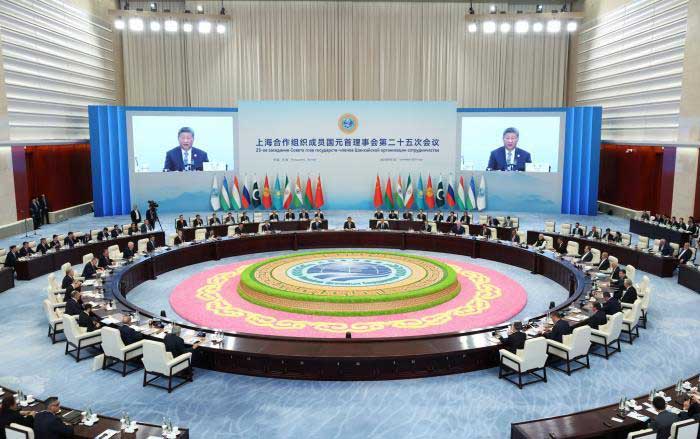
A defining feature of the GGI is its vigorous endorsement of multilateralism, with the United Nations positioned as the indispensable forum for managing global affairs. The initiative calls for extensive consultation, joint contribution, and equitable sharing of benefits — principles it contrasts with what it characterises as the exclusionary nature of Western-led alliances and blocs.
Proponents argue that stronger multilateral frameworks can reduce the risk of conflict, stabilise international relations, and accelerate sustainable development — particularly at a time when geopolitical tensions routinely complicate collective action.
Governing the Challenges of Tomorrow
The GGI also turns its attention to the governance gaps opening up in emerging domains. Among the priorities it identifies are reform of the international financial architecture, regulation of artificial intelligence, cybersecurity cooperation, climate action, trade governance, and the emerging frontier of outer space.
These are areas where existing frameworks are widely seen as inadequate, and where the absence of coordinated international responses carries serious risks. China’s initiative calls for new mechanisms capable of keeping pace with rapidly shifting global realities.
A Long Road Ahead
Beijing is measured in its expectations. Reforming entrenched international institutions and forging consensus among scores of nations with competing interests is, by any measure, a long and difficult process. Yet China argues that the direction of travel is clear — toward greater multipolarity, broader participation in global decision-making, and growing pressure for fairness from an increasingly influential developing world.
The GGI’s ultimate ambition — a more just and equitable international order — will hinge on whether nations can move beyond narrow self-interest to embrace shared responsibility for the challenges that affect all of humanity.