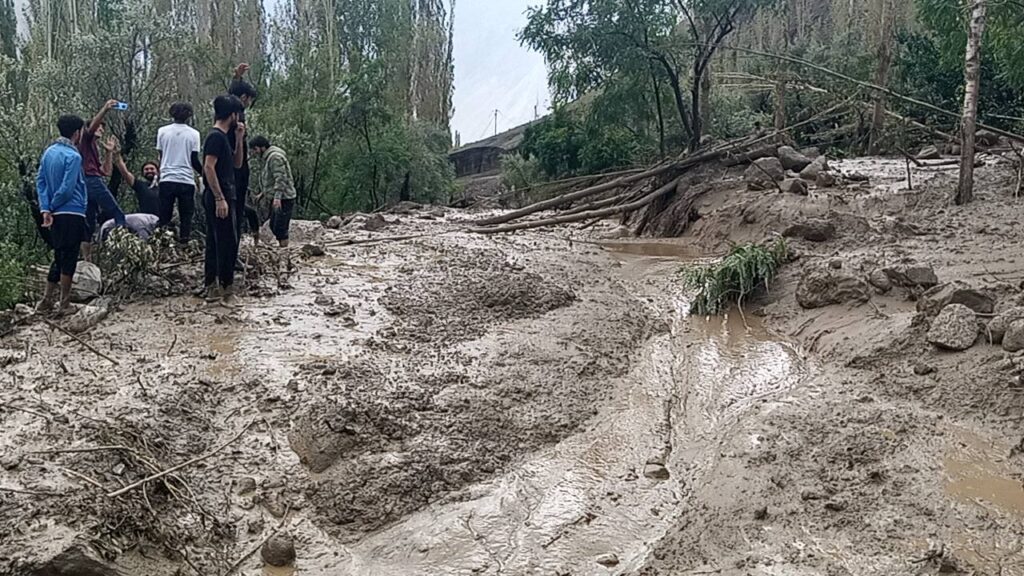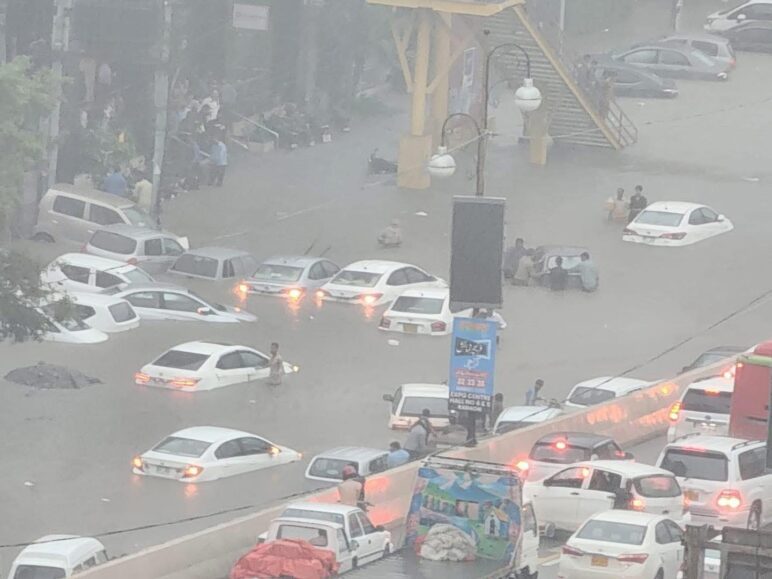
Gilgit: Heavy rainfall on July 21 and 22 triggered destructive flash floods across Gilgit-Baltistan, causing widespread damage in Hunza, Nagar, Gilgit, Ghizer, Astore, Skardu, Ghanche, and other districts. Homes, roads, bridges, farmland, irrigation channels, and other critical infrastructure were swept away as floodwaters tore through valleys across the region, with officials attributing the devastation to a combination of rapid glacier melt, cloudbursts, and torrential monsoon rains.
While no confirmed fatalities have been reported so far, hundreds of families have been affected, and authorities have urged residents to stay away from rivers, streams, and other flood-prone areas as water levels remain unpredictable. Preliminary assessments suggest losses running into billions of rupees, with damage extending to homes, hotels, shops, agricultural land, crops, orchards, roads, and bridges across the region.
Hunza: Landslides Strike Damaged Infrastructure Again

In Shishkat, Hunza, a well-known hotel overlooking Attabad Lake, the Luxus Motel, was struck by a fresh landslide on Wednesday. The building had already been sealed off after sustaining damage in last year’s devastating floods and was in the process of undergoing restoration when the latest flooding further devastated the surrounding area, raising fresh questions about the safety of reconstruction efforts in flood-prone zones along the lake.
Elsewhere in Hunza, floodwaters and debris caused widespread destruction in Garelth Gunesh Nala, where agricultural land was damaged, numerous trees were uprooted, and a tractor was buried under flood-carried debris, underscoring the scale of material loss faced by local farmers.
Nagar: Hispar Valley Cut Off
In neighboring Nagar district, authorities were forced to close the Hispar Road after water levels in the Hunza River rose sharply, severing access to the remote Hispar Valley and leaving residents there isolated from the rest of the district until conditions stabilize.
Gilgit City and Surrounding Areas Bear the Brunt
The city of Gilgit itself was hit hard. Flash floods originating from nearby mountains inundated the densely populated Konodas neighborhood, where floodwater entered numerous homes, destroyed streets, and spilled onto the main road, disrupting traffic across the city.
Rising water levels in the Gilgit River also caused persistent flooding in Khari, near Karakoram International University, where floodwater entered several homes and forced residents to evacuate the area entirely.
In Asugha Nala, part of Haramosh, landslides caused extensive damage to settlements and farmland, while several livestock animals were swept away and killed, dealing a heavy blow to households dependent on herding for their livelihood.
In Chamogarh, flood torrents completely destroyed roads and standing crops, while several irrigation canals were washed away, leaving residents facing an acute shortage of drinking water in the aftermath.
The Naltar Highway suffered severe damage at multiple points along its route and remains closed to all traffic, leaving hundreds of tourists and travelers stranded in the area with no clear timeline for reopening.
In Jagote Colony, Jutal, rising water levels in the Hunza River have created a serious and ongoing flood threat, placing at least eight families directly at risk of losing their homes.
Beyond these specific incidents, roads, drinking water systems, irrigation infrastructure, and electricity supply have been severely affected more broadly across Haramosh, Danyore Nala, Bagrot, and Chamogarh. Electricity supply from the Hamaran Power House had only recently resumed after being down for several days, but renewed flooding forced the shutdown of both Bagrot power stations as well as the Jalalabad Power House, plunging affected residents back into darkness. Communities in these areas have now gone without electricity, clean water, and reliable road access for several consecutive days.
Compounding the crisis, severe riverbank erosion in the low-lying areas of Jutal has forced several families to abandon their homes altogether, adding to the region’s growing number of displaced residents.
Ghizer District: Bridges, Roads, and Water Systems Destroyed
Flooding has also severely disrupted life in Small, Yangal, Aiyashi, and several other areas of Ghizer district.
In Darnak village, part of Small, the village’s only shop was completely washed away, while crops and irrigation canals suffered heavy damage. The flooding also cut off road access to the village, isolating residents from surrounding areas.
In Yangal Bala, flash floods destroyed an RCC bridge along with irrigation canals and the drinking water supply system, while the Ghizer-Shandur Road remains completely blocked. At one point, floodwaters temporarily blocked the natural flow of the Ghizer River, creating a temporary lake before draining. Several houses were damaged in the process, and agricultural land, crops, and trees were swept away by the surge.
In Aiyashi, floodwaters destroyed standing crops, entered residential areas, and completely washed away the village’s only link road, cutting off a key route for residents.
Riverbank erosion has additionally damaged farmland and non-fruit-bearing trees across Yasin Valley, Sheliabad, and Amit, adding to the district’s mounting agricultural losses.
Astore: Cloudburst Devastates Los Das Village
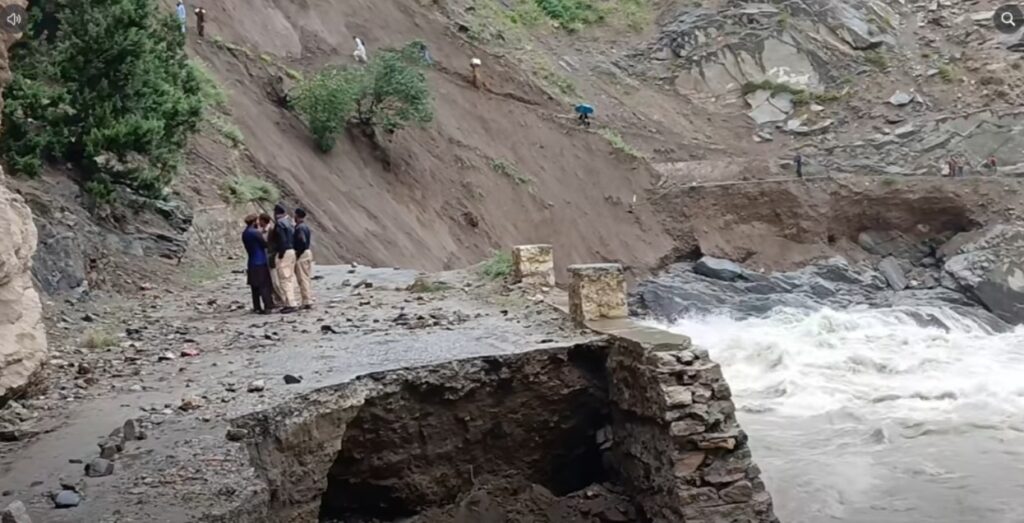
A cloudburst in Los Das, Astore, caused widespread destruction across the village. According to an initial assessment, 12 houses were completely destroyed, while 20 others sustained partial damage. Agricultural land, crops, trees, irrigation channels, and local infrastructure were also heavily affected, resulting in substantial financial losses for local families already struggling with the aftermath.
Separately, the Astore Valley Road has been blocked by a landslide at Khachak, leaving thousands of travelers and tourists stranded in the area. Officials from the Public Works Department (PWD) estimate that it may take up to a week to fully reopen the road to traffic.
Skardu: Key Bridge Washed Away

In Skardu, a bridge near Ansar Camp on the Gilgit-Skardu Road was washed away by flash floods, forcing authorities to temporarily close the highway to all traffic. Construction crews have since begun building a temporary bypass road in an effort to restore connectivity, though officials caution it may take considerable time before normal traffic flow resumes along the route.
Ghanche: Embankment Breach Floods Residential Areas
In Hushe, Ghanche district, rising water levels damaged a protective embankment maintained by the Local Government and Rural Development (LG&RD) department, allowing floodwater to enter two residential neighborhoods and inundate nearby agricultural land.
Karakoram Highway Closed at Dasu
Continuous rainfall and flash flooding have also raised water levels in the Indus River, forcing authorities to temporarily close the Karakoram Highway (KKH) at Uchar Nala in Dasu to all types of traffic, further disrupting the region’s already strained transport links.
A Region Under Mounting Climate Pressure
Taken together, the scale of destruction across Gilgit-Baltistan highlights the growing vulnerability of the region to extreme weather events driven by glacier melt and intensifying monsoon patterns. With key highways closed, power stations shut down, water systems destroyed, and thousands of residents and tourists stranded or displaced, local authorities and disaster management agencies now face the dual challenge of emergency relief and long-term infrastructure rebuilding in one of Pakistan’s most climate-vulnerable regions.