Gilgit-Baltistan, Pakistan — Rising temperatures and shifting weather patterns are taking a visible toll on one of the world’s largest glaciers outside the polar regions, as new observations show accelerated melting across the Baltoro Glacier in the Karakoram range.
A Warming Region
Pakistan remains among the countries most severely affected by climate change, and its northern glaciers are melting at an increasing pace as temperatures rise and weather patterns intensify. This year, snowfall in the country’s northern areas arrived nearly three months later than usual, while heatwaves have placed additional strain on the major glaciers spread across the Karakoram region.
Gilgit-Baltistan is home to three of the world’s seven longest glaciers found outside the polar regions — the Biafo, Baltoro, and Batura glaciers. The Baltoro Glacier alone stretches 63 kilometers, making it the second-longest glacier outside the poles, with roughly 30 tributaries and a surface area of about 1,291 square kilometers.
Lakes Where There Was Once Solid Ice
Independent Urdu correspondent Mona Khan spent 12 days trekking across the Baltoro Glacier last year, documenting its changing conditions firsthand. Her observations point to between 25 and 30 lakes that have formed on the glacier’s surface as a result of melting ice, alongside large ice masses collapsing into caves.
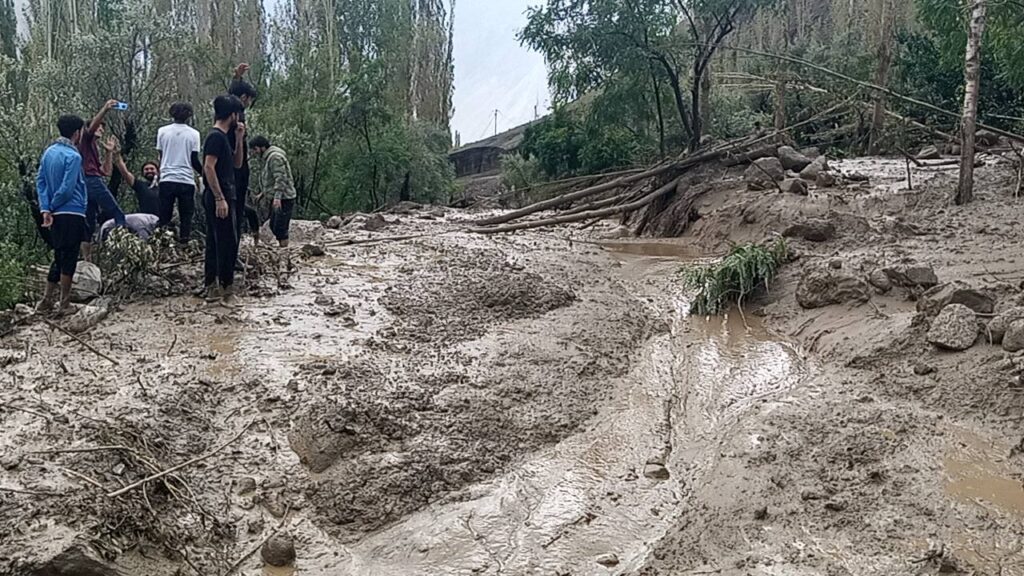
Terrain that once resembled solid rock, too hard to examine closely, is now visibly eroding — a shift researchers warn could intensify significantly over the next decade if left unaddressed. Glacier melt has already contributed to more frequent flooding in mountainous regions over the past three years, including the devastating 2022 floods that began in Pakistan’s north before causing widespread human and financial losses nationwide.
Glaciers in Gilgit and Hunza face similar risk due to their lower elevation, while peaks near the Baltoro Glacier — including the Paiju mountains, once snow-covered year-round — are reportedly losing their summer snow cover, according to local residents.
The Bigger Picture
Climate change expert Asif Shuja told Independent Urdu that global average temperatures are already rising by 1.5 degrees Celsius, and reaching 2 degrees could trigger severe consequences: accelerated glacier melt, worsening floods, rising oceans threatening coastal areas, and disruptions to global food supplies. Shuja emphasized that voluntary emissions reductions by developed nations remain the most viable path to controlling global temperature rise.
About the Baltoro Glacier
The Baltoro Glacier runs through the heart of the Karakoram range, near K2 — at 8,611 meters, the region’s highest peak — along with three other neighboring peaks that also exceed 8,000 meters. As an alpine glacier and the second-longest outside the polar regions, it has been measured to a depth of more than a mile.
Its surface hosts massive ice formations alongside clear meltwater streams that travel for kilometers through narrow channels before disappearing beneath the ice. That meltwater eventually re-emerges as a full-fledged river, flowing down the Baltoro valley toward the Indus River some 300 kilometers away.
The Takeaway
The changes documented on the Baltoro Glacier reflect a broader pattern reshaping Gilgit-Baltistan’s high-altitude landscape. As melting accelerates and flood risk grows, the region’s glaciers — long considered among its most stable natural features — are emerging as an early warning sign of climate change’s impact on Pakistan’s north.