
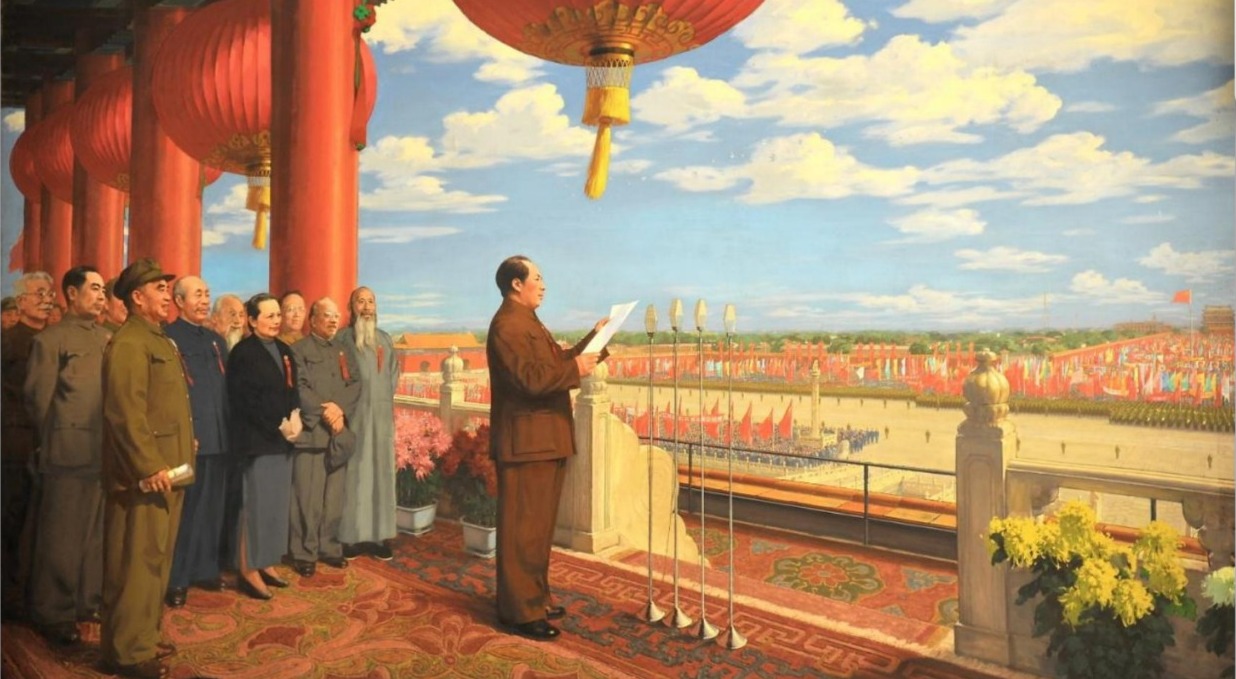
“We are all convinced that our work will go down in the history of mankind, demonstrating that the Chinese people, comprising one-quarter of humanity, have now stood up.”
The communist revolutionist Mao Zedong had said while declaring founding of People’s Republic of China at the rostrum of Tiananmen Square, Beijing on October 1, 1949.
By the time hundreds of nations and territories had gained independence or liberation following World War II, primarily through decolonization, with dozens of new states emerging in Asia and Africa between 1945-1960. Many European nations were also freed from Axis occupation, making a single number impossible but marking a massive global shift from colonial empires to self-determination.
The leaders of these newly independent countries must have made announcements in a similar tone and offered grand promises to their people, but the story of fulfilling those promises is different in every case. Among these stories, China’s story is unique, and this uniqueness is what has placed it among the world’s most powerful nations.
The account of this journey was presented in a two-hour lecture by Professor Dr. Zhang Genfu, Vice President of Zhejiang Normal University, Jinhua, China, which I had the honor of attending. I am certain that after hearing it, you too would be astonished.
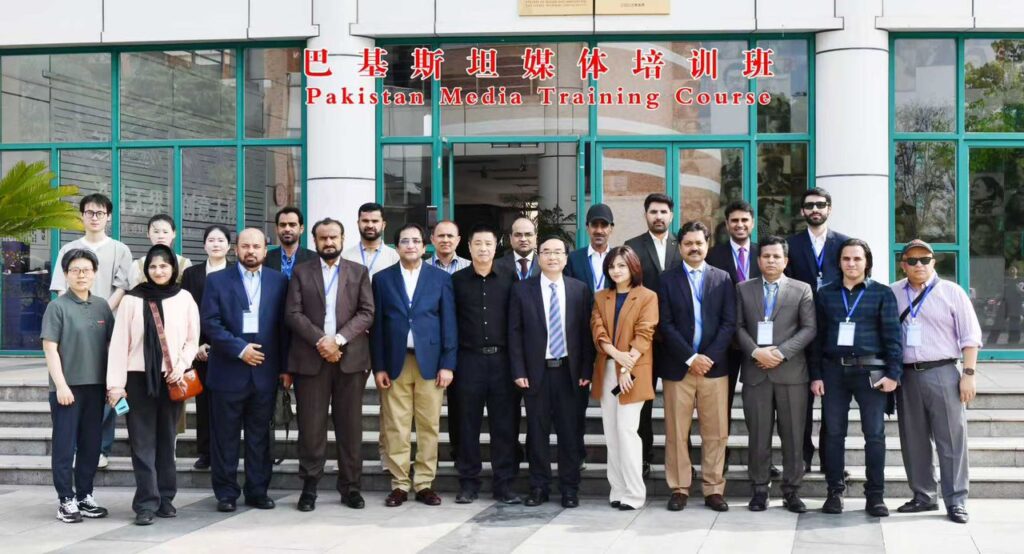
Back (Left to right) Felix, Xu, Victoria, Aslam Gohram, Ali Tayyab, Rahat Ali, Ali bin Younus, Allah Bakhsh, Shah Dotani. M Mansoor, Abdullah Haroon
Overview of China
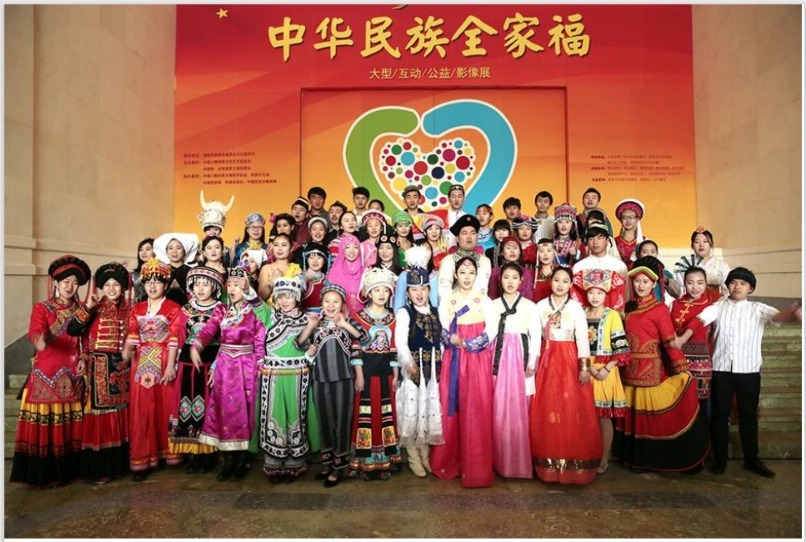
China, the world’s third-largest country, spans 9.6 million km² of land and 4.73 million km² of sea. As of 2021, its population is 1.41 billion, with Hong Kong, Macao, and Taiwan adding over 240 million. The country has 34 provincial-level regions, including 23 provinces, 5 autonomous regions, 4 municipalities, and 2 special administrative regions. There are 56 ethnic groups, with the Han making up over 90% of the population.
China’s terrain rises in the west and slopes eastward, featuring all five major global landforms, supporting diverse agriculture and industry. Over 1,500 rivers traverse the country, including the Yangtze (6,300 km) and Yellow River (5,500 km), while the Beijing-Hangzhou Grand Canal is the world’s longest and oldest artificial waterway. The climate varies from continental monsoon in the east to alpine on the Qinghai-Xizang Plateau and arid in the northwest.
China’s civilization spans over 5,000 years, with a human history of one million years and a cultural history of 10,000 years. It is the world’s only uninterrupted civilization, forming a unique spiritual and cultural heritage for its people. Archaeological finds—from Neolithic pottery and Xia, Shang, and Zhou artifacts to oracle bone inscriptions—highlight China’s continuous cultural development.
Recent discoveries, like the nearly one-million-year-old Yuxian skull, suggest human evolution may have begun in Asia, reshaping global understanding of early humans.
Modern Chinese characters such as “sun” (日), “moon” (月), and “person” (人), still resembling their ancient forms, reflect the civilization’s extraordinary continuity.
The Development Path of China
Since the founding of the Communist Party of China, the past 100 years witnessed the New- Democratic Revolution, the Socialist Revolution and Construction, the Reform, Opening Up, and Socialist Modernization, and the New Era of Socialism with Chinese Characteristics. China has achieved three leaps (from “standing upright” to “becoming prosperous” and to “growing in strength”).
New-Democratic Revolution of China (1919–1949)
The New-Democratic Revolution was a period of struggle led by the Communist Party of China (CPC) to overthrow imperialist, feudal, and bureaucratic-capitalist rule. It aimed to establish a new democratic society, uniting workers, peasants, and progressive forces against foreign domination and the Kuomintang (KMT).
Key events of this period included the May 4 Movement 1919, the founding of the CPC 1921, the Anti-Japanese War (1937–1945), and the final victory in the Chinese Civil War (1945–1949), culminating in the founding of the People’s Republic of China on October 1, 1949.
Socialist Revolution and Construction (Oct. 1949 – Nov. 1978)
The founding of the People’s Republic of China in 1949 has ended a history of suffering caused by imperialism and colonial oppression. The newly founded China realizes power to the people. China started a new era of development, cleared out bandits and remnant KMT reactionary forces, peacefully liberated Tibet, and unified the entire mainland. Stabilized prices, unified standards for finances and the economy, completed the agrarian reform, introduced the policy of equal rights for men and women. China took on a completely new look.
In 1953, the Party officially set forth the general line for the transition period, namely gradually realizing the country’s socialist industrialization and socialist transformation of agriculture, handicrafts, and capitalist industry and commerce over a fairly long period of time. (Basically, completed the socialist transformation) An independent and relatively complete industrial system and national economic framework were established.
The Great Leap and Cultural Revolution
Mistakes were made such as the Great Leap Forward and the “Cultural Revolution”, two of the most devastating and tumultuous periods in modern Chinese history, characterized by radical social experiments and political purges.
The campaign Great Leap Forward (1958-1962), was an attempt to rapidly transform China from an agrarian economy into a modern, industrialized communist society through forced collectivization and massive industrialization efforts. Mao envisioned surpassing Western industrial nations like Great Britain and the United States in steel production and agricultural output. Private farming was banned and replaced by vast “People’s Communes,” and backyard furnaces were promoted to produce steel. The policies were disastrous. The focus on industrial quotas led to the neglect of agriculture, and flawed reporting concealed widespread famine conditions. This resulted in the Great Famine, one of the deadliest famines in human history, causing the deaths of tens of millions of people.
Likewise, Great Proletarian Cultural Revolution (1966-1976) was a movement launched by Mao to purge the country of “impure” elements and ideological opponents, reasserting his absolute authority after the failures of the Great Leap Forward. It’s goal was to enforce communist orthodoxy, eliminate traditional Chinese culture, and root out perceived “capitalist roaders” within the CPC. Mao mobilized millions of young people into paramilitary groups called the Red Guards, who persecuted intellectuals, officials, and anyone deemed an ideological threat. The revolution led to widespread violence, the destruction of cultural artifacts, severe economic dislocation, the closing of schools and universities, and millions of deaths and imprisonments. The turmoil did not officially end until Mao’s death in 1976.
These events are officially acknowledged by the Chinese Communist Party as major mistakes.
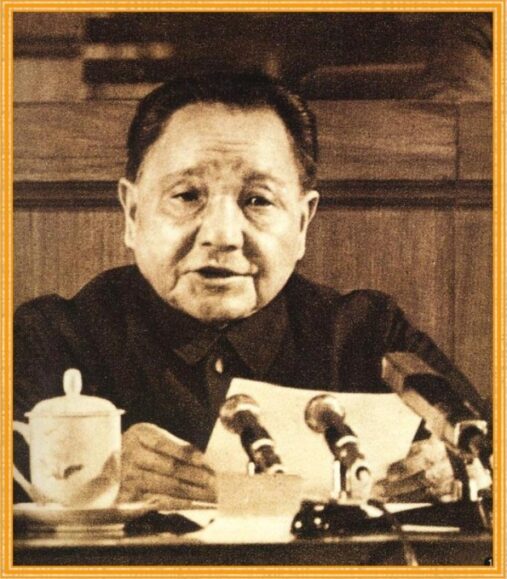
Change of leadership
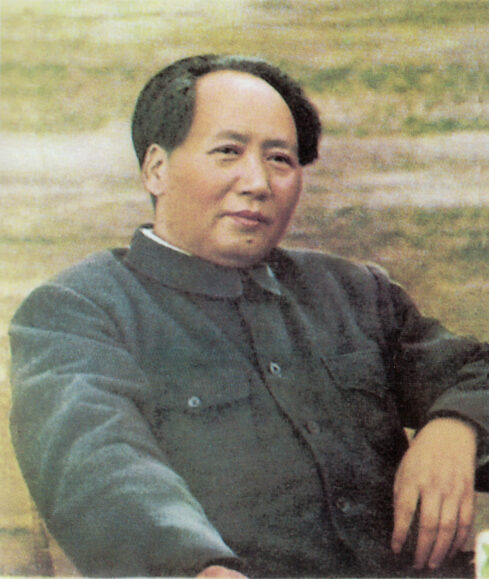
Mao Zedong, the great leader of China died on September 9, 1976. He was succeeded by Hua Guofeng who led the impoverished nation for two years. Guofeng died in 1978 and succeeded by Deng Xiaoping, a Chinese statesman and revolutionary who served as the paramount leader of the People’s Republic of China from 1978 until his death. He is widely recognized as the “Architect of Modern China” for initiating the “reform and opening up” policies that transitioned China from a Maoist planned economy to a socialist market economy, leading to rapid industrialization and significant economic growth.
Reform & Opening-up and Socialist Modernization (Nov. 1978- Nov. 2012)
Reform and Opening-up and Socialist Modernization from November 1978 to November 2012 were driven by profound changes in both the international and domestic environment. The driving force behind Reform and Opening-up lay in the theme of the times, as peace and development increasingly became the global trend, with no world war expected in the foreseeable future and the possibility of long-term peaceful development emerging. This stable international environment created favorable conditions for national development and modernization. At the same time, the rise of the third technological revolution propelled the third wave of international modernization, greatly transforming productivity and economic structures worldwide. As American economist Walt Rostow observed, from a historical perspective, postwar development may be the most significant event since Britain’s Industrial Revolution in the 18th century, highlighting the transformative impact of technological progress on global and socialist modernization during this period.
According to Professor Gengu, “China was about 40 years behind developed countries and 20 years behind Republic of Korea and Brazil. In 1978, China’s GDP per capita was $155 (385 Yuan), 1/20 of Japan’s and 1/30 of USA’s,” reflecting China’s status as one of the world’s poorest countries before Deng Xiaoping’s economic policies began.
Deng Xiaoping said “Twenty years of experience, especially the lessons of Cultural Revolution, tells us that reform is imperative. It is also imperative to make new political, economic and social policies.”
Gearing up his reforms policies, Deng said “Recently our comrades have been abroad, and realized that we are lagging behind.” “We must catch up with the times. This is the goal of our reform.”
In May 1978, Zbigniew Brzezinski, National Security Advisor to President Jimmy Carter, met with Chinese Vice-Premier Deng Xiaoping in Beijing. Brzezinski informed Deng that the United States had decided to move forward with the full normalization of relations, attaching great strategic importance to the relationship due to shared concerns over Soviet expansionism. This visit paved the way for the formal agreement later that year. The U.S. and China made a joint announcement to establish official diplomatic relations on January 1, 1979.
In January 1979, shortly after normalization, Deng Xiaoping made a historic visit to the United States and had extensive meetings with President Carter, Brzezinski, and other U.S. officials. During this visit, the two sides signed an Agreement on Cooperation in Science and Technology and a Cultural Agreement.
During the paramount leadership of Deng Xiaoping, the US president Ronald Reagan visited People’s Republic of China and met with the then president Li Xiannian in 1988.
Deng Xiaoping was the chairman of CCP’s Central Military Commission, member of powerful Standing Committee of the political bureau and vice chairman of CCP.
After the incident of Tiananmen Square in Beijing 1989, Deng yielded his chairmanship of Military Commission to Jiang Zemin, who had replaced Zhao Ziyang as the general secretary of CCP.
From 1993 onwards, under the leadership of Jiang Zemin, China experienced substantial developmental growth with reforms, saw the peaceful return of Hong Kong from the United Kingdom and Macau from Portugal, and improved its relations with the outside world.
Hu Jintao, who was elected president in 2003, reintroduced state control in some sectors of the economy that were relaxed by the previous administration. He sought to improve socio-economic equality domestically through the Scientific Development Concept, which aimed to build a “Socialist Harmonious Society” that was prosperous and free of social conflict. Through Hu’s tenure, China’s influence in Africa, Latin America, and other developing countries has increased.
Progress and Achievements
Professor Genfu has described the progress and achievements of this period in three categories
From 1978 to 1988, China launched Reform and Opening-up by shifting its focus from class struggle to economic development. Rural reforms such as the household contract responsibility system boosted agricultural productivity, while the idea that “practice is the sole criterion for testing truth” encouraged reform. Policies allowing some regions and people to get rich first, the opening of coastal cities, and normalization of China–US relations accelerated modernization.
From 1989 to 1999, reforms deepened as China transitioned from a planned economy to a socialist market economy. Living standards improved, housing shortages eased, and markets flourished. Financial systems, education reform including nine-year compulsory education, and all-round opening-up expanded from coastal to inland regions, while reforms extended from rural to urban and social sectors.
From 2000 to 2012, Reform and Opening-up entered a comprehensive stage. China joined the WTO, abolished the agricultural tax, and promoted the goal of building a harmonious society. Cultural development and Sinology revived, while community-level self-governance strengthened socialist democracy and social cohesion.
New Era of Socialism with Chinese Characteristics
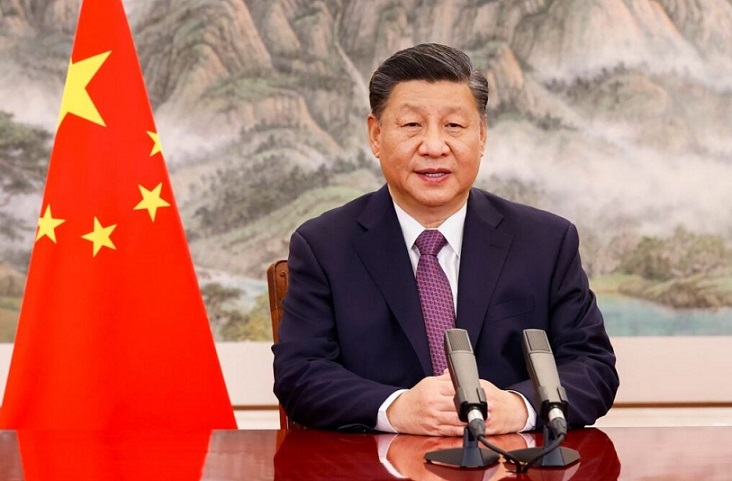
Since the 18th CPC National Congress in November 2012, China has entered a New Era of Socialism with Chinese Characteristics. Xi Jinping, elected President in 2013, also serves as General Secretary of the CPC and Chairman of the Central Military Commission. This era has established Xi Jinping Thought on Socialism with Chinese Characteristics for a New Era, strengthening Party leadership and providing new strategies for national governance. Guided by the Chinese Dream, the Chinese path to modernization, and major strategic plans, China has achieved moderate prosperity, eliminated absolute poverty, and promoted high-quality development. Opening-up has expanded through initiatives such as the Belt and Road, while socialist democracy, rule of law, cultural confidence, ecological progress, national security, and people’s wellbeing have all been significantly enhanced, further consolidating China’s modernization and global influence.
China’s incredible achievements
China’s achievements since Reform and Opening-up are marked by rapid economic growth, major social progress, and profound cultural change. China rose to become the world’s second-largest economy by 2010, with GDP surpassing 100 trillion yuan in 2020 and accounting for about 17% of the global economy. Urbanization and living standards improved steadily, as seen in rising consumption and a sharp decline in Engel’s coefficient for both urban and rural households. At the same time, China achieved major technological breakthroughs in fields such as high-speed rail, aerospace, satellite systems, 5G, and deep-sea exploration, fostering a more confident, energetic society full of vitality and opportunities.
The 20th National Congress of CPC & Chinese Modernization
The 20th National Congress of the CPC, held in Beijing in October 2022, marked a milestone in advancing Chinese modernization. It reviewed major achievements of the new era, reaffirmed Xi Jinping’s core position and the guiding role of Xi Jinping Thought, and set the central task of advancing national rejuvenation through a Chinese path to modernization. Emphasizing common prosperity, high-quality development, ecological harmony, peaceful development, and whole-process people’s democracy, the Congress outlined strategic plans to build China into a great modern socialist country in all respects.
The Systems and Culture of China
China’s systems and culture combine a people-centered political framework with a long-standing civilizational tradition. The system of People’s Congresses ensures that state power belongs to the people, while multi-party cooperation under CPC leadership, regional ethnic autonomy, and community-level self-governance support broad participation and unity. Economically, public ownership plays a dominant role alongside diverse non-public sectors. Culturally, China draws on over 5,000 years of tradition rooted in Confucianism and enriched by openness, harmony, pragmatism, and moral education, which today are integrated with socialist core values to promote national unity, social stability, and social vitality.