
Jinha, China: Hidden in Houjia Village near Jinhua City in China’s Zhejiang Province lies an extraordinary cultural treasure: the ancient Wuyao Fire pottery kiln, locally known as Guohuoyaohu, meaning Ancient Wuyao Fire. Our visit took place on the third day of our journey through China and marked our very first outdoor excursion. After traveling for about an hour from Bai North Street in Jinhua’s Wucheng district, we arrived at this remarkable site—one that preserves centuries of ceramic heritage while remaining very much alive today.
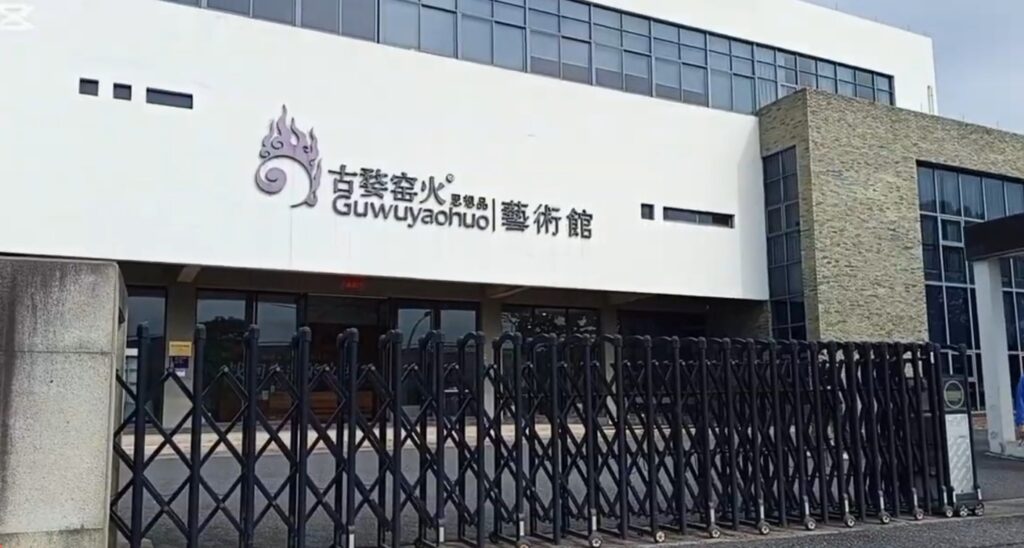
The Wuyao Fire complex is not merely a historical monument; it is a living cultural center. The site consists of several sections, most notably a museum and an active ceramic factory operating within the same premises. This unique combination allows visitors to explore ancient artifacts while also witnessing how traditional pottery techniques continue to be practiced by modern artisans.
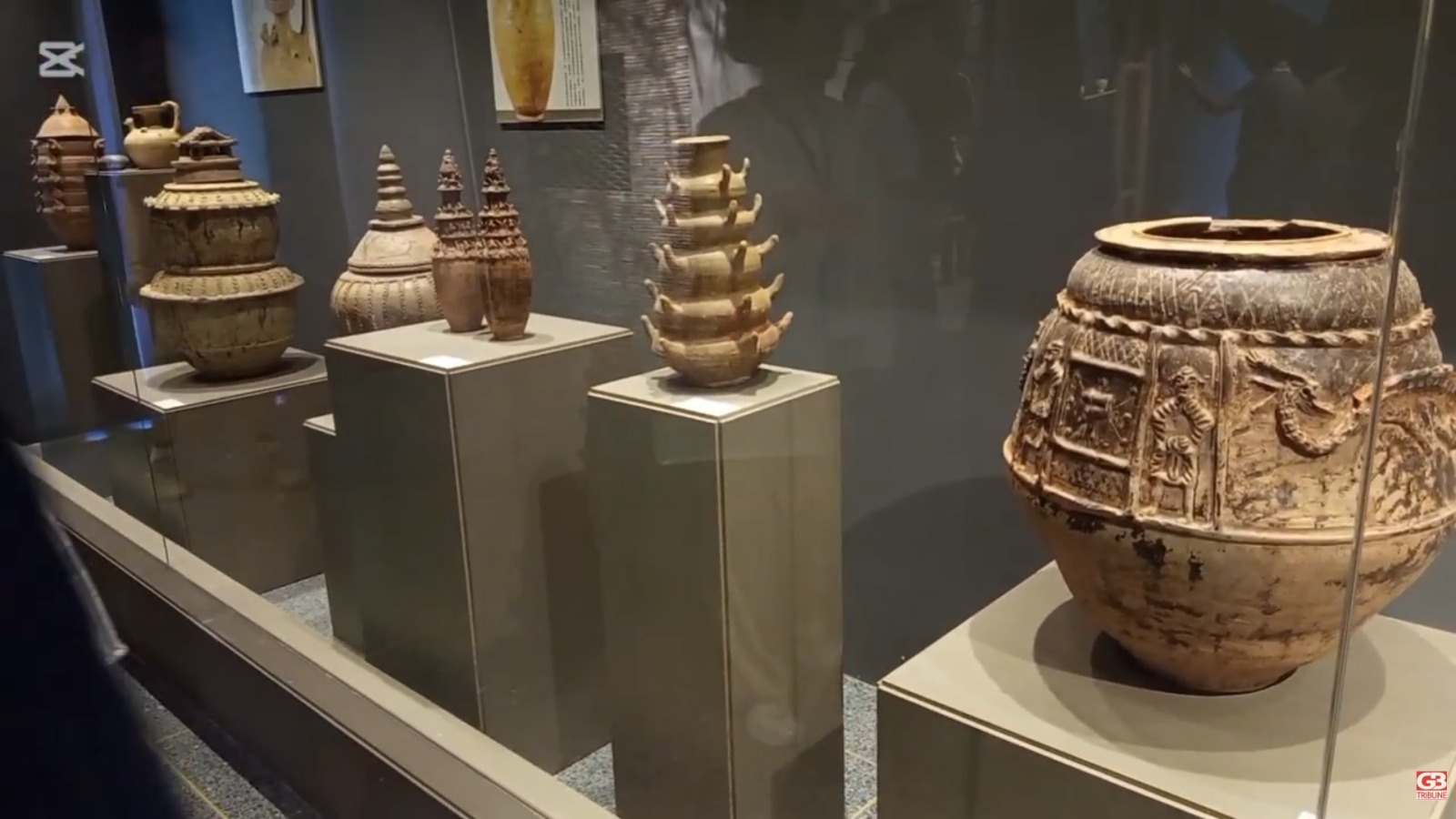
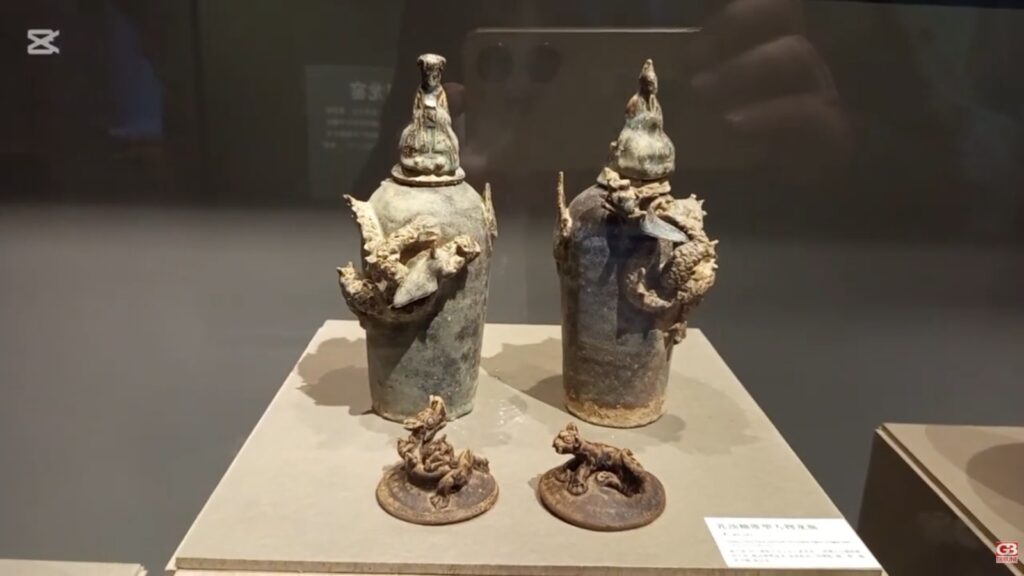
Inside the museum, we encountered an impressive collection of rare and valuable ceramic works. These included finely crafted teacups, ritual vessels, figurines, and pots dating back to different dynasties, including pieces associated with the Qing Dynasty.
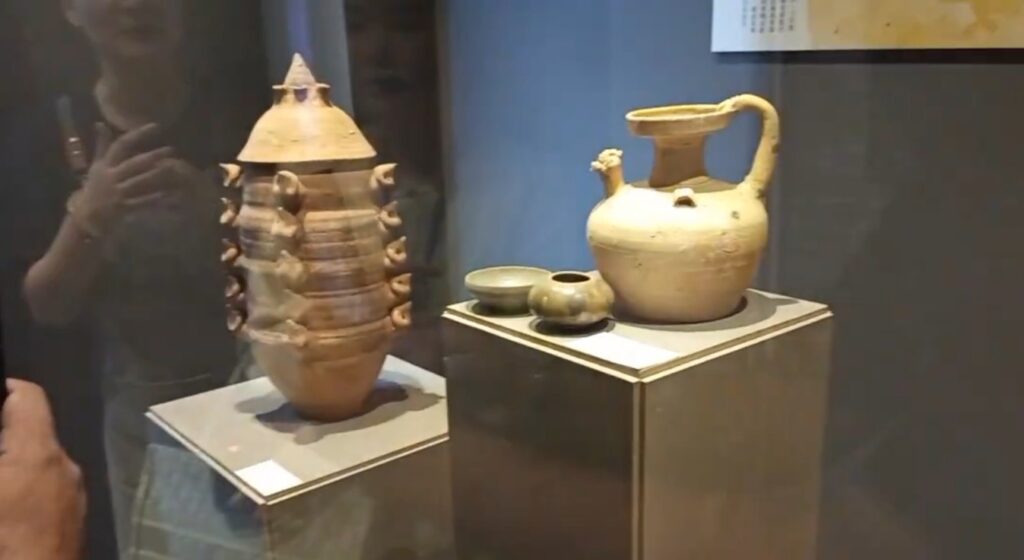
Some vessels are believed to be funerary urns, often referred to as soul jars (hunping), traditionally placed in tombs to house the spirit of the deceased. These intricately designed ceramics, often featuring multiple spouts arranged in layers, symbolized abundance, prosperity, and continuity of family lineage. The spouts frequently appear in multiples of five, reflecting the Chinese philosophy of the Five Elements (wuxing).
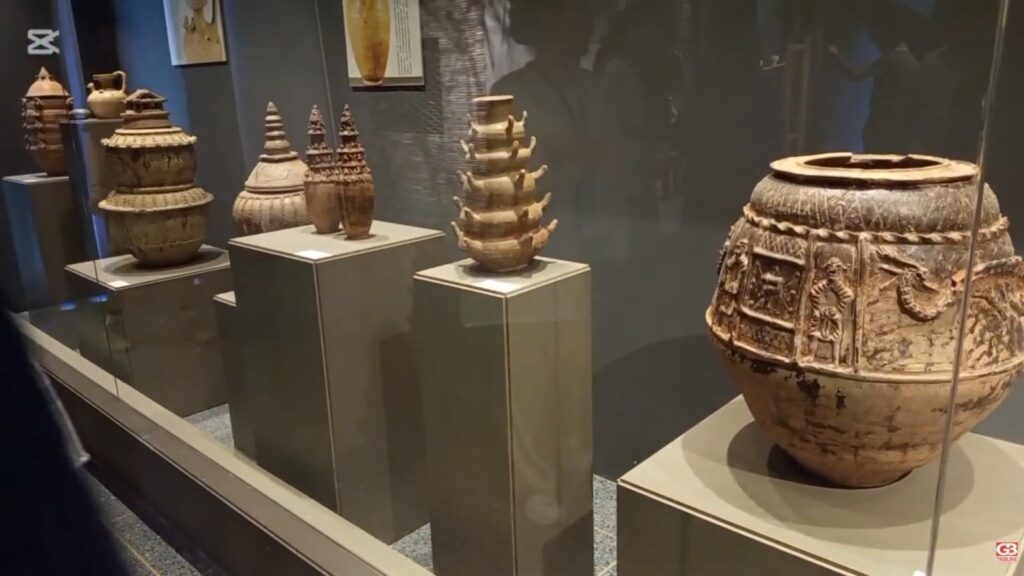
The museum also showcased ceramic items rooted in Taoist culture, representing concepts such as harmony with nature, happiness, balance, and longevity. Taoism, one of China’s foundational philosophies, emphasizes simplicity, inner freedom, and alignment with the natural flow of the universe—values clearly reflected in the form and symbolism of these ceramic works.
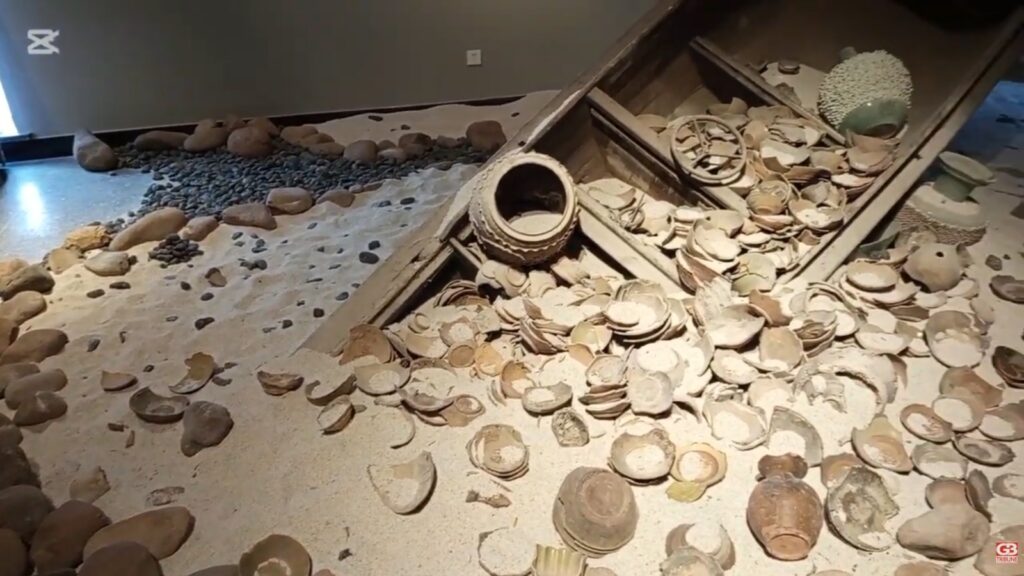
There is an another interesting gallary, showcasing Sink Boat. During the Song Dynasty (960–1279 AD), Chinese ceramic production flourished like never before. Master artisans perfected techniques that produced delicate, beautifully glazed wares, which became highly sought after around the world. China began exporting ceramics extensively, sending them along maritime trade routes across Asia and beyond. One fascinating historical incident highlights the global demand for these wares: a Chinese ship carrying 155 ceramic items destined for Japan sank, preserving the cargo and offering archaeologists a rare glimpse into the trade and styles of Song-era ceramics. Such discoveries underscore the enduring influence of Chinese pottery and its role in cultural exchange centuries ago.
During the tour, a dignified female museum representative patiently explained the history and significance of each artifact. Our host, Victoria, translated her explanations into English, allowing us to fully appreciate the cultural depth behind every piece. The experience felt both educational and deeply personal.
After exploring the museum, we were taken into the factory area, where skilled craftsmen were actively shaping clay by hand. Watching them work was a powerful reminder that these ancient techniques are still alive. The visit concluded at the massive kiln itself, where raw clay is fired and transformed into enduring works of art.
Exploring Wuyao Fire was more than a tour—it was a journey through time, revealing how history, philosophy, craftsmanship, and community continue to shape China’s living pottery traditions today.
Great!!
flet.ai – The Ultimate AI Tools!